Whoever said, “Managers create talent pipelines” was onto something. While senior leaders set the conditions that enable strong talent flow, and recruiters attract and acquire new talent, it’s truly middle managers who shape talent pipelines more than any other layer.
Their commitment to coaching conversations, quality of feedback, and development practices determines whether team members become the leaders of tomorrow or simply grow disengaged and quietly look for new opportunities elsewhere. That’s why managers account for approximately 70% of the variance in team engagement, according to Gallup(*). It also means this key responsibility is likely one of the highest-leverage actions CD-style leaders can take to drive organizational impact.
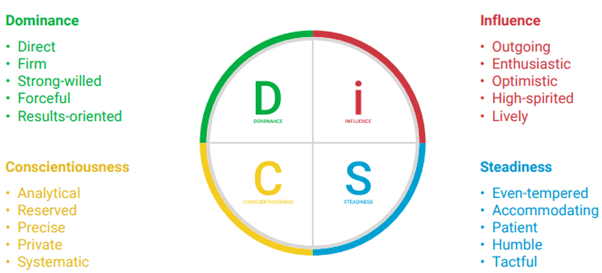
Managers who lean into the Everything DiSC® CD Style (a profile blend of Conscientiousness and Dominance) will find this topic lands squarely on their strengths, but also surfaces some familiar blind spots. In this article, we’ll draw from the Everything DiSC podcast, hosted by Dr. Mark Scullard, as well as targeted development tools from Wiley’s new Catalyst Worksmart resource to explore how:
- CD leaders can leverage natural skepticism and analysis for powerful coaching conversations
- Style-aware development conversations can build loyalty as well as competence
The CD Manager’s Default Relationship with Talent Development
People with a CD style approach teamwork with a deep need for competence, control, and a badge-of-honor aversion to vulnerability. Many set exceptionally high standards for themselves (even if they don’t do so for others) and evaluate people almost exclusively through the lens of capability and accuracy. As Mark said in the podcast, it’s tied to a fundamental driving assumption of someone with strong Conscientiousness and Dominance: “I’m valuable if I’m competent.” With those skills consistently questioned or threatened, CD individuals feel stressed and often under attack.
That belief drives them to persist through challenges, seek precision where others accept “close enough,” and refuse to settle for mistakes or mediocre work. When properly channeled, that pursuit of mastery makes CD style leaders exceptional at recognizing skill gaps, creating robust development plans, and motivating people to reach higher.
CD’s skeptical logic also serves as a useful filter. They aren’t prone to inflated praise or unrealistic expectations, which means CD managers usually have a clear-eyed view of team members’ capabilities. They know where people need to develop (which can create highly realistic growth plans), and because CD leaders often model disciplined self-improvement, their teams may have sharper critical-thinking skills and a higher bar for excellence.
Where Your CD Strengths Become Coaching Weaknesses
Those strengths can easily become weaknesses. High standards are fantastic until someone doesn’t meet them, at which point natural tendencies toward a “should mindset” often cause intense frustration. According to Mark on the podcast, CD managers have “very little tolerance for people they regard as incompetent,” may delegate as little as possible to those teammates, or work around them entirely.
They may offer feedback that feels corrective, rather than coaching or encouraging (remember: CD value input that moves projects forward). Brutal candor can come across as blunt, cold, or directly antagonistic (especially to styles that need psychological safety before they can hear and implement feedback).
CD managers may also struggle to find the balance between praising wins and diving into the next problem. Skepticism makes offering compliments, empathy, or “touchy-feely” encouragement downright uncomfortable for some CD types. Interacting with someone overly gushy or “happy-go-lucky” can provoke reactions from mild discomfort to total revulsion. When it comes to coaching, this makes great debriefers and editors of other people’s work but can struggle with using their real strengths to motivate, reassure, and turn talented team members into loyal, high-potential future leaders.
Lastly, CD leaders’ laser-focus on problems can suck the joy out of team accomplishments. Rolling from one victory to the next goal leaves people wondering, “It’s never enough, is it?” which can diminish intrinsic motivation. While empowerment is critical for growth, CD managers sometimes under-delegate because of their need for control, or coach too precisely because they can do the task themselves.
Again, these aren’t immature or terrible leaders, just ones wired to solve problems over praising wins. But again, left unchecked, talented CD managers can inadvertently kill your talent pipeline.
Use Your Inside Edge: Catalyst Worksmart Coaching Tools
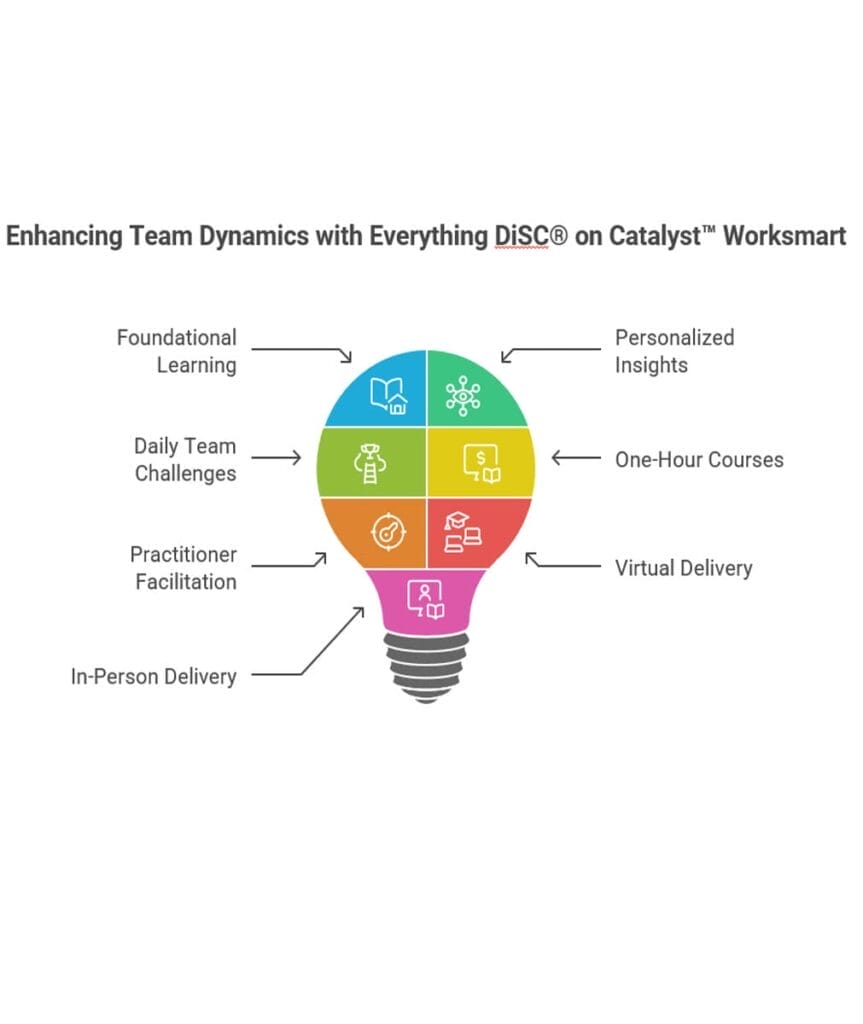
Everything Disc Catalyst Worksmart was designed to help managers overcome those natural tendencies. It offers personalized development guidance tailored specifically to your DiSC style across five modules most relevant to coaching and managing talent.
- Giving Constructive Feedback: This module confronts the CD penchant for accurate-but-brutal feedback head-on. You’ll discover your style-specific challenges (Impatience with illogical thinking, “Should-ing” others, and defaulting to problem-focused sentences are just a few CD tendencies Worksmart addresses), and learn how to leverage the four elements of strong feedback: specific, actionable, balanced, and encouraging. Worksmart even outlines how to flex those elements based on who’s receiving your coaching. Maybe that means adding extra clarity and assurance when giving feedback to your high-S teammate who needs to feel safe before processing your input. Either way, you gain tools for giving feedback that corrects behavior while maintaining—or increasing—motivation and self-esteem.
- Empowering Your Team: Probably every CD manager’s favorite: Control. The empowerment module helps you identify your default delegation style and access customizable teammate comparison reports that show how each team member’s style prefers to receive autonomy. From there, you’ll build empowering development plans that allow your teammates the right level of independence while holding them to the accountability and standards they desire. This not only decreases your urge to take work away from teammates who “aren’t doing it right” but multiplies your team’s capacity by actually developing their skills.
- Motivating Your Team: You know what motivates you. Now learn what motivates others without becoming a psychic…or draining your team’s energy! Worksmart’s motivation module maps out common motivators and detrimental practices by DiSC style. You’ll learn how to create an environment where your teammates feel inspired to grow rather than cajoled into compliance (and learn how to leave compliance to the C’s). Simple concepts like recognizing incremental wins, connecting daily tasks to big-picture purpose, and decreasing common demotivators like unclear expectations are powerful motivators CD managers may never consider.
- Managing Conflict: Naturally skeptical and cautious CD managers tend to build an “airtight case” before approaching others about perceived conflict or problems. This module helps you identify that tendency and build customized action plans for common styles you’ll encounter. You can learn how to approach conflict with teammates in a way that surfaces the issue sooner, allows you to consider their perspective (even if you don’t agree), and keeps development conversations focused on solutions that benefit your mutual growth.
- Helping Your Team Navigate Change: Whether it’s a stretch assignment during your performance development discussion or preparing for a new role, career development involves change. While CD managers naturally lean into logic and realism when helping your team navigate change, this module will show you how to leverage those strengths while filling in the areas your team needs more from you. Maybe that means welcoming optimism and big-picture clarity when leading your team through a transition.
Become the Coach Your Team Needs
By now, you might be thinking: “That all sounds great, but I need help coaching my API teams.” Newsflash: These modules work for you too! Taking the time to understand how your teammates perceive your management style can unlock powerful insights into how to adapt your style to fit each situation and team member. When CD managers integrate personalized development plans from Catalyst Worksmart into their management style, they graduate from brilliant skeptics to confident mentors who develop capable, engaged, and loyal employees.