As a middle manager, you are the critical link between strategic plans and frontline results. No matter your industry or company culture, your ability to communicate strategy into focused, prioritized, daily execution is likely the #1 predictor of success or failure for new initiatives. And we have data showing that when middle managers are strong, they reduce the strategy-execution gap more than any other management lever.
If you have a CS style in Everything DiSC® (the combination of Conscientiousness and Steadiness), your responsibility to shepherd strategy through your team and into sustainable results plays to your strengths of reliability and thoroughness while highlighting your common challenges with change and urgency. Your desire for routine and predictability, awareness of risk, and commitment to making consistent progress are perfectly suited to building low-surprise execution plans.
However, when it comes to leading behaviorally different teammates, some of those same tendencies can unintentionally impede momentum and create barriers to agility. By leveraging the style-specific tools found in Wiley’s Everything DiSC® Catalyst Worksmart, you can harness your natural steadiness and transform your approach to execution into something that is not only reliable but inclusive of diverse workstyles.
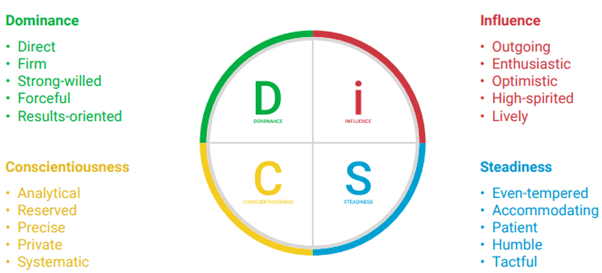
The Everything DiSC CS Manager – Strengths and Challenges with Execution
CS leaders are naturally detail-oriented, deliberate, and focused on creating stable environments where everyone knows what to expect and can do their jobs without unnecessary interruptions. They translate strategies into actionable execution by creating logical, sequential checklists with clear expectations; planning for potential risks and obstacles; and implementing “controls” to catch errors and minimize surprises along the way. Once a plan is set, they are excellent at following through with consistent effort and vigilantly maintaining quality standards.
While this can create an ideal climate for focused productivity, it also means teams who work for or with strong CS managers often experience:
- Unchallenging timelines
- Thorough resource management
- Predictable solutions and actions
- A generally calm workspace
The CS Manager’s Approach Can Create Blindspots with Execution
While your focus on stability and minimized risk creates incredible value for reliable execution, it can also cause difficulties when strategy calls for faster pace, innovative new ideas, or steps into the unknown. You may become overly cautious, double down on routine, or try to gather more information before you feel comfortable moving forward. Your strong desire not to burden or upset others can make you hesitant to assert yourself in situations that require urgency or tough decisions.
Leading behaviorally diverse teams can amplify typical execution challenges. Quick-paced or more dominant personalities may become frustrated with what they perceive as your slow response time or resistance to new opinions. And because you are naturally private with your concerns and prefer not to draw attention to yourself, it can be difficult to generate momentum or advocate for your team when facing resistance from other leaders. In summary, when it comes to execution, your strengths are maximized when things are stable and planned, and your challenges are magnified when teams need more speed, flexibility, or clear directive from you.
How Can Catalyst Worksmart Help You Become an Exceptional Executive?
Everything DiSC® Catalyst Worksmart was built for times like these. It offers personalized guidance focused on each leader’s unique strengths and challenges. Below are five ways Catalyst can turn your self-awareness into superpowers that help you lead teams through the strategy-to-execution process more effectively.
1. Giving and Receiving Constructive Feedback: While CS leaders give feedback that is usually well-considered and accurate, it can often be indirect or passive, leaving more direct or outcome-oriented teammates confused about what to change. This module dives into CS-specific challenges with giving feedback and teaches the four components of effective feedback (specific, actionable, balanced, and encouraging) along with concrete strategies to adapt your approach to fit each DiSC style. The end result is a team that hears you more clearly and receives course corrections without losing trust or motivation.
2. Managing Conflict: Whether it’s about competing priorities, resource allocation, or perceived pace, executing strategy will inevitably create some conflict. The conflict resolution module helps you recognize your default tendency to avoid rocking the boat and walk through personalized action steps you can take to effectively navigate conflict with any DiSC style. You’ll learn how to identify conflicts early, guide conversations toward low-drama solutions, and work through disagreements to keep your team moving forward.
3. Empowering Your Team: Execution doesn’t happen until someone takes responsibility for making it happen. The empowerment module helps you identify your default approach (typically cautious delegation with ample oversight to ensure quality) and presents side-by-side insights into how each teammate prefers to receive support and autonomy. Armed with this knowledge, you can begin building personalized action plans that empower your team to take on more responsibility while maintaining the predictability and standards you care about—allowing you to step back from micromanaging and multiply your team’s execution capacity.
4. Helping Your Team Navigate Change: At some point, most strategies require your team to change how they work. This module helps you understand how every DiSC style experiences change and provides style-specific strategies you can use to help your team embrace necessary transitions. You’ll learn how to meet their unique needs for stability (without being overbearing) and build on your natural risk awareness to become a calming force that keeps your entire team grounded during times of change.
5. Motivating Your Team: Execution is a marathon, not a sprint. This means your team will need consistent energy to perform at their best, day in and day out, especially if they’re behaviorally diverse. The motivation module maps out what drains and energizes each DiSC style and provides actionable strategies to create an environment that motivates people to excel. You’ll discover how to recognize incremental progress, connect daily tasks to larger purpose, reduce common execution “drainers” like unclear expectations, and build healthy urgency without disrupting team harmony.
Ready to Lead Your Team Through Every Execution Challenge?
- Complete the Feedback, Empowerment, and Help Your Team Through Change modules in Catalyst Worksmart prior to your team’s next big strategic initiative.
- Review your Team Comparison Reports to identify each teammate’s execution preferences, then try adjusting one part of your plan or meeting agenda to accommodate their style.
- Identify one limiting belief each quarter (“I can’t move forward until I have all the information I need” or “If I push too hard, it will ruin team harmony”) and test a new behavior opposite to your belief (delegating a high-visibility project or offering a timeline with mild urgency).
- Build in frequent, scheduled team check-ins that allow you to review both progress metrics and how team members are experiencing the work.
- Take a minute to celebrate after every major execution milestone to recognize individual contributions and ask your team how you can better support different workstyles.
CS style leaders have all the foundational skills required to transform strategy into well-oiled execution. By adding personalized perspective from Catalyst Worksmart to your natural strengths, you can elevate your execution game to truly shine by guiding and empowering behaviorally diverse teams with clarity, stability, and lasting momentum.
This is Part 1 of a series dedicated to helping CS-style leaders become extraordinary middle managers. Next, we’ll explore coaching, developing, and managing talent through the CS lens. If you’re wondering about another responsibility along The 5 Responsibilities of Every Middle Manager framework, feel free to reach out and let us know!
Which module from Catalyst Worksmart sounds like it would have the biggest impact on your current execution challenges? Or, do you lead a particularly diverse team and have an area of leadership you’d like to learn more about?