Disclaimer: This post is intended to share research on validity and insights on how to apply Everything DiSC® ethically with multicultural and international groups. It is not meant to provide an exhaustive coverage of the topic of culture and psychological assessment. If you’re interested in reading more about how culture can impact your use of Everything DiSC®, please consult the Everything DiSC Manual.
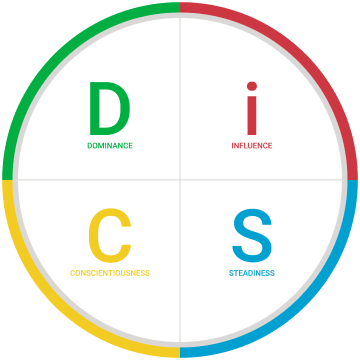
With international and multicultural teams becoming increasingly common, we often receive the question: “Is Everything DiSC culturally consistent, or is it biased towards Western (a.k.a. U.S.) culture?” From there, many concerns may arise about whether the four behavioral priorities measured by Everything DiSC – Dominance, Influence, Steadiness, and Conscientiousness – are equally important across cultures, languages, countries, etc. Or whether test results would be artificially low or perhaps inflated for someone who did not grow up speaking English or living in the United States.
Research shows that Everything DiSC® does translate across cultures well (with some slight adaptations), has been normed on large samples of diverse populations, and studies demonstrate minimal practical differences in results across demographics and countries where the product is used. Like any assessment of behavior, it is not entirely “culture-free.” There may be variations in how certain behaviors are displayed or perceived depending on social norms. However, through large-scale norming processes, adaptive testing technology, and focusing on priorities people value in the workplace (rather than the deeper values that drive a culture), Everything DiSC attempts to minimize bias or inappropriate interpretations.
Understanding the foundations of the Everything DiSC model
Universal Behavioral Priorities: Everything DiSC is grounded in Dr. William Moulton Marston’s 1928 theory of normal human reactions to the four fundamental aspects of their environment: Results/Challenge (Dominance), Relationships/Enthusiasm (Influence), Cooperation/Consistency (Steadiness), and Accuracy/Quality (Conscientiousness). These priorities are measured on 8 scales (Di, i, iS, S, SC, C, CD, D) and 12 styles on the Everything DiSC circumplex.
Behaviors are not fixed traits that are inherently stronger or weaker in different cultures. The Everything DiSC model treats behaviors as flexible preferences that shift based on the situation. This flexibility allows Everything DiSC to translate easily in different countries – all people react (with some variation in expression) to challenge, people, pace, and procedures.
Demonstrated Reliability Across Demographics: Everything DiSC has been administered numerous times across various demographic subgroups within the United States. The Everything DiSC Manual (Chapter 5) reports on the psychometric properties of Everything DiSC in a large sample of 26,703 individuals. This sample was further broken down into subgroups based on gender, heritage (Asian, African American, Caucasian, Hispanic, Native American), and education (high school/technical school/some college vs. college/graduate school).

Internal Reliability (Cronbach’s Alpha):
Every scale contains multiple questions that are measured for internal reliability. Across all subgroups, all 8 scales demonstrate good to excellent internal reliability (Cronbach’s alpha values well above .70 and many above .80–.88)
Examples:
- * Di scale demonstrates internal consistency estimates of ~.84 to ~.85 for all gender groups and heritage groups
- * C scale has alphas ranging from ~.75 to ~.80 when comparing education levels
No significant differences are found.
Intercorrelations & Confirming the Circumplex Model Fit
Correlation matrices for each subgroup are presented in Tables 5.4-5.13 of the Everything DiSC Manual. As you can see, they show the expected pattern for a circumplex model: scales that are adjacent to each other on the circumplex have moderate positive correlations (e.g., Di and i have correlations around .46 to .52), scales that are opposite from each other on the circumplex have strong negative correlations (e.g., D and S have correlations around -.66), and scales that are 90° from each other on the circumplex have low correlations that hover around zero.
Because each subsample had sufficient internal strength (see Cronbach’s alphas bolded on the diagonals), the correlations between scales are very similar across subsamples. This allows the authors to confidently state that:
“There were no substantive differences in the reliability or structural validity of Everything DiSC across gender, heritage, or educational subgroups.”
Proof of everything DiSC being adapted and validated for global audiences
Language Options and Worldwide Use
Everything DiSC has been translated into 22 languages and is used within 72 countries worldwide. It has been taken by over 10 million learners within more than 150,000 organizations. Here are some ways we work to ensure the tool is adapted properly:
Localized Norms
Everything DiSC doesn’t simply translate our English assessment into other languages and use the same scoring key. Each language version is normed (scores are calibrated) on a sample of native speakers from that country (e.g., we collect data from Spanish-speakers to create the Spanish norms, French-speakers for French norms, etc.). This ensures that scores will be representative of cultural and linguistic norms.
Adaptive Testing
Everything DiSC uses computer adaptive testing to provide dynamic item selection, choosing the questions that are most precise for each individual respondent. This allows Everything DiSC to be shorter (it takes 15–25 minutes to complete) and more accurate for a wide variety of respondents, including those who may not be native English speakers.
Real World Validation
Everything DiSC boasts high rates of learners who agree the assessment was accurate (90%) and they were satisfied with their report (97%). These numbers hold true for international audiences. Additionally, we’re aware of several third-party sources that have reviewed DiSC and found minimal to no practical differences in how the dimensions are expressed across cultures. While there may be some variations in behavior (i.e. showing assertiveness) that are more common in certain countries (i.e. individualistic versus collectivist cultures), the underlying priorities of DiSC are still measurable and reliable.
While Everything DiSC was developed by an American and is normed on large samples within the United States (samples that include people of every heritage), it is used around the world and has specific studies dedicated to validating the assessment in other languages. We are not aware of any publicly available studies that show Everything DiSC is invalid or biased towards any one culture.
REMINDERS:
- UNDERSTAND THE CONTEXT: Trained facilitators should feel comfortable talking about how certain behaviors may be more or less expected or accepted based on cultural norms. For example, how high Directness (D) may be encouraged in some cultures’ definitions of leadership while it may conflict with demonstrating humility in others.
- FOCUS ON INCLUSIVENESS: Highlight commonalities in priorities and use differences to develop empathy and adaptation, not divisive stereotypes.
- USE ETHICALLY: Avoid making assumptions about entire cultures or countries based on a four-point scale. Use in conjunction with other forms of cultural intelligence training when necessary.