Everything DiSC® Uncovered Series: A Balanced Exploration of Reliability, Validity, and Practical Application
Disclaimer: This article series is intended for informational purposes only, drawing upon published reliability and validity evidence from the assessment publisher, Wiley, as well as insights and research from outside sources. The articles do not advocate for or against the use of Everything DiSC®. Instead, they aim to empower learning and development (L&D) professionals, facilitators, and users of Everything DiSC® to make informed decisions about when and how it can be used to support workplace goals.
Everything DiSC® is a popular personality and behavior assessment tool used in organizations worldwide. It is often used to promote self-awareness, communication skills, team building, and conflict resolution.
But how accurate is Everything DiSC®? Is it reliable and valid for purposes commonly encountered within L&D? And if so, what does it measure well—and where are its limitations?
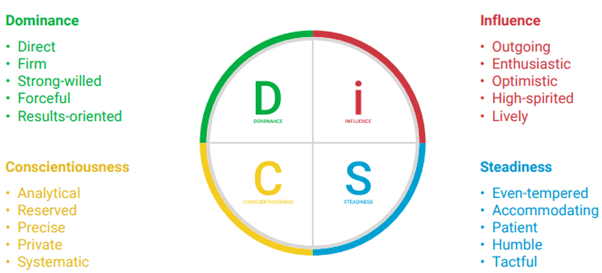
Unlike clinical-grade personality or career assessments, Everything DiSC® is not designed as a clinical instrument for mental health diagnosis or even to measure personality traits. Instead, it is intended to measure behavioral preferences in the workplace.
This does not mean Everything DiSC® is right or wrong. It simply means the assessment was designed for a different purpose than many other commonly used assessments. As such, it should be evaluated according to the appropriate standards within that context: reliability and validity for workplace development purposes, rather than its ability to predict job performance.
Organizations interested in the available applications can explore the range of Everything DiSC® assessments, which includes solutions for Workplace, Management, Work of Leaders®, Agile EQ™, Productive Conflict, Sales, and Catalyst™.
Throughout the Everything DiSC® Uncovered series, we review published evidence from the Everything DiSC® assessment publisher, available in Chapter 4 of the Everything DiSC® Manual, and compare those findings with outside research, expert recommendations, and observations about similar frameworks.
The series explores what Everything DiSC® does well, what it doesn’t do, and how organizations can supplement it. Finally, we’ll share a balanced perspective on using Everything DiSC® that you can apply within your own workplace.
What Everything DiSC® Can’t Do for You: Predictive Validity & Job Performance
“What assessment will help me predict X?” is a question we often hear in the world of learning and development.
Will this tool help predict job performance? Leadership potential? Sales success? Can it tell us something about retention, engagement, or team productivity?
Everything DiSC® demonstrates strong reliability and validity in terms of the constructs it intends to measure, as explored earlier in this series.
But there is another important question:
How well does Everything DiSC® predict workplace outcomes?

What Everything DiSC® Claims About Predicting Workplace Outcomes
Chapter 4 of the Everything DiSC® Manual does not provide validity evidence in terms of predictive or criterion-related validity.
In other words, while the publisher has tested Everything DiSC® for reliability and validity within the model itself, the manual does not present data demonstrating how well Everything DiSC® scores or styles predict external factors such as job performance.
Again, this isn’t necessarily a criticism. It reflects the assessment’s intended purpose, which differs from assessments specifically designed to evaluate candidates for hiring or other high-stakes decisions.
The manual dedicates considerable attention to demonstrating internal reliability and stability. Each of the eight scales shows strong internal consistency, with Cronbach’s alpha coefficients ranging from .80 to .90. Test-retest coefficients range from .85 to .88, with a median angle change of 12° over a two-week period.
The manual also examines validity through intercorrelations, multidimensional scaling (MDS), and factor analysis to support the use of the eight scales and circumplex model.
But that still leaves an important question.
Can Everything DiSC® scores accurately predict or assess:
- Job performance?
- Supervisor ratings?
- Sales commissions earned?
- Successful leadership?
- Team productivity?
- Achievement of specific workplace objectives?
There is no direct evidence presented by the publisher demonstrating that Everything DiSC® can predict these types of outcomes.
While some professionals may use Everything DiSC® in this way, research supporting such applications is limited.
What Others Are Saying About Everything DiSC® Predictive Validity

Reviews of DiSC-style assessments, including newer models such as Everything DiSC®, frequently point to limitations surrounding predictive validity.
When compared with other models and assessment methods used for hiring, promotion, and leadership development, Everything DiSC® has limited evidence supporting its ability to predict job performance.
Meta-analytic findings and independent research involving the Big Five personality model, cognitive ability tests, structured interviews, and other assessment methods have demonstrated relationships with workplace performance outcomes.
For example, research on the Big Five has found that broad personality dimensions can predict task-related job performance across occupations, with conscientiousness showing particularly notable validity coefficients (Ones et al., 1993).
This highlights an important distinction between behavioral preferences and performance potential.
Being comfortable with a fast-paced, direct communication style does not necessarily make an employee a higher performer.
Everything DiSC® may identify certain behavioral preferences and workplace patterns, but these factors alone do not account for aptitude, experience, knowledge, motivation, or the many other variables that can influence success on the job.
The same distinction applies to leadership. A development solution such as Everything DiSC® Work of Leaders® can help leaders understand how their DiSC® style relates to leadership situations, but this is different from using a DiSC® style as a predictor of who will ultimately succeed in a leadership role.
Everything DiSC® Is Better Suited for Development Than Selection
Wiley’s own guidance positions Everything DiSC® as a development tool rather than a selection tool.

The assessment is intended to help existing employees and teams understand behavior, improve communication, increase self-awareness, and build stronger working relationships.
Because of this distinction, Everything DiSC® should not be used as the sole tool for decisions involving:
- Job performance evaluation
- Prediction of sales or production targets
- Hiring
- Promotion
- Employee placement
This doesn’t reduce the potential value of Everything DiSC®. Instead, it helps organizations use the assessment for the purposes it was actually designed to support.
What Everything DiSC® Can Do for Your Organization
Everything DiSC® was built and tested for different purposes than assessments specifically designed for employee selection or performance prediction.
Everything DiSC® is not intended to be a selection tool.
Instead, it can be used to facilitate discussions about behavior and help employees develop better working relationships with one another.
For example, Everything DiSC® Workplace® is designed to help people better understand themselves and others, appreciate different workplace priorities and preferences, and build more productive and effective working relationships.
When used appropriately, Everything DiSC® can support conversations around:
- Self-awareness
- Communication preferences
- Workplace behavior
- Team dynamics
- Conflict
- Collaboration
- Relationship development
For organizations specifically working through workplace conflict, Everything DiSC® Productive Conflict applies DiSC® in a conflict context to help participants increase self-awareness around their conflict behaviors and develop more productive responses.
These types of applications align much more closely with the developmental purpose for which Everything DiSC® was designed.
Organizations can also explore the complete range of Everything DiSC® products to find solutions focused on workplace relationships, management, leadership, sales, emotional intelligence, and productive conflict.
What If You Need to Assess Job Performance?

If your organization wants to use assessment data to evaluate or predict aspects of job performance, Everything DiSC® does not necessarily need to be excluded from the conversation.
Instead, consider using it alongside other appropriate assessment methods.
Many qualified professionals who specialize in Everything DiSC® also have experience with other assessment and measurement tools.
Combining Everything DiSC® with methods such as performance reviews, structured interviews, job knowledge tests, and other relevant assessment methods can provide a more well-rounded view of an employee or candidate.
The important distinction is that Everything DiSC® should contribute information about workplace behavioral preferences—not be treated as a standalone predictor of future performance.
Everything DiSC®: Strong internal reliability and validity
Everything DiSC®, like any assessment tool, is only as valuable as the purpose for which it is used.
Everything DiSC® has demonstrated strong internal reliability and validity related to its underlying model and constructs. However, it is not designed or validated as a tool for predicting job performance.
That distinction matters.
Organizations should understand both the strengths and limitations of Everything DiSC® before investing in assessments, training, and related materials.
When used appropriately, Everything DiSC® can support powerful and productive conversations, strengthen workplace relationships, and help employees better understand how they interact with one another.
The goal isn’t to make Everything DiSC® do everything.
It’s to use Everything DiSC® for what it was designed to do and supplement it with other tools when your organization’s goals extend beyond those boundaries.