**DISCLAIMER: This article series is intended for informational purposes only, drawing upon published reliability/validity evidence from the assessment publisher (Wiley) as well as insights and research from outside sources. The articles do not advocate for or against the use of Everything DiSC®. Instead, they aim to empower learning and development (L&D) professionals, facilitators, and users of the Everything DiSC® tool to make informed decisions about when and how it can be used to support workplace goals. **
Welcome to the DiSC® Uncovered series. This set of articles takes an honest look at the reliability, validity, and practical application of Everything DiSC®. While some perceive it as just another pop personality tool, Everything DiSC® has solid research backing (when you dig into publisher-supplied sources, such as the Everything DiSC® Manual, Chapter 4). The series goal is to present a balanced review of the evidence so L&D professionals and users can decide how and where to use it appropriately, rather than arguing about whether it should be used at all.
For more information, check out the rest of the Everything DiSC® Uncovered Series:
- Everything DiSC® Uncovered 1: Everything You Want to Know About Reliability & Validity but were Afraid to Ask
- Everything DiSC® Uncovered 2: Reliability and Validity of Everything DiSC – What Does the Science Say?
- Everything DiSC® Uncovered 3: Common Questions Answered (Simplicity, Barnum, Original Theory)
- Everything DiSC® Uncovered 4: A Balanced Exploration of Reliability, Validity and Practical Application
- Everything DiSC® Uncovered Series 5: Everything DiSC vs “Deeper” tools like Big Five
- Everything DiSC® Uncovered Series 6: Strengths and Limitations with Everything DiSC
- Everything DiSC Uncovered Series 7 – Final Conclusions
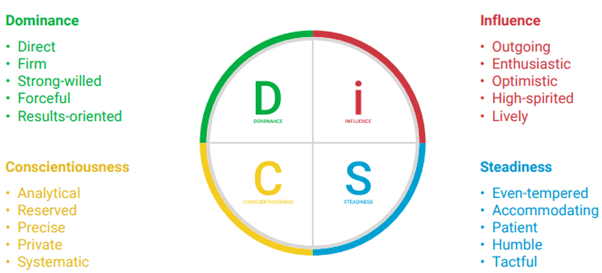
As one of the most widely used tools in L&D, Everything DiSC® has been around for a very long time, and millions of people have taken it. Organizations find it works for several reasons: its simple, intuitive design; a visually engaging circumplex model, especially for teams and groups; and its immediate relevance to workplace situations. At some point in their journey with DiSC®, however, many L&D professionals and participants may start wondering:
“How does this fit in the ‘big picture’ of personality? And when should we use something else?”
We’ll explore how Everything DiSC® compares to other popular (and science-based) personality frameworks, specifically:
- Everything DiSC® vs. the Big Five (OCEAN) model
- Everything DiSC® vs. Core Values and Motivational Tools
Everything DiSC® vs. the Big Five Model
The Big Five personality dimensions (Openness to Experience, Conscientiousness, Extraversion, Agreeableness, and Neuroticism) are considered the most valid and cross-culturally universal model in contemporary personality psychology.
Unlike DiSC® styles, which reflect situational preferences, the Big Five measures broader and relatively stable traits. Here’s how Everything DiSC® overlaps (and doesn’t) with the Big Five:
What they measure: Research has found moderate correlations between the Everything DiSC® scales and some Big Five factors. The i and iS styles correlate with Extraversion, C and SC with Conscientiousness, and D/CD with low Agreeableness (assertiveness). Everything DiSC® doesn’t explicitly measure Openness to Experience (versus tradition) or Neuroticism (versus emotional stability/stress).
In practice: Everything DiSC® is excellent for understanding and discussing observable workplace behaviors and interaction preferences (speed, people vs. tasks focus, etc.). The Big Five model provides a broader view of personality and has stronger predictive links to job performance (conscientiousness is the strongest predictor!), leadership, and stress tolerance. Many organizations teach Everything DiSC® for quick yet substantial “style awareness,” then layer a Big Five assessment for deeper trait analysis (strengths/development) when needed for selection, advancement, or succession planning.
Everything DiSC® vs. Values/Motivational Profiles
While frameworks like the Big Five get at some aspects of what matters to us, values-based assessments (Barrett Values Center, Personal Values Assessment) and motivational inventories (Reiss Motivation Profile, Hogan Motives, VIA Character Strengths) specifically target the underlying “why” of our behavior.
These tools measure what people care about most, what drives them, and what provides meaning and fulfillment. Here’s how Everything DiSC® differs from values and motivations assessments:
It assesses observable behavior, not internal motivators. Everything DiSC® describes what someone does and how they do it in work settings. It does not assess internal needs, drives, or motives such as achievement, affiliation, power, security, autonomy, or legacy. For example, someone with a predominant D-style may behave in very similar ways to others because they have a strong need for control/results or because they fear failure/difference and feel they must prove themselves. Everything DiSC® captures the observable style; values/drives explain the underlying motivator.
Uses with other tools for deeper insights: Everything DiSC® can be combined with values/motives assessments to help people understand how their underlying needs influence their behavior. Continuing the previous example, an i-style communicator who ranks high on “relationship” values may be perfectly suited for customer service or HR. However, if their driving motivation is achievement rather than affiliation, they may rush people into accomplishing tasks at the expense of relationships. You can’t know that from behavior alone.
Why Everything DiSC® Has Plenty of Application
Here are other tools out there that cover a lot of what DiSC doesn’t. Does that mean it’s useless? Of course not! Remember that Everything DiSC® has been popular for decades for a reason. It works well within its scope:
- It’s intentionally designed for the workplace.
- It’s just twelve styles to remember (with clear priorities illustrated by those bubble-dot things).
- The model itself, along with simple dot placement based on those priorities, makes the discussion of interpersonal differences straightforward.
- As discussed in prior segments of this series, Everything DiSC has strong internal reliability and construct validity.
When Might You Use Something in Addition to Everything DiSC®?
- Behavioral style awareness/team development: Everything DiSC® works great here. Don’t fix it if it isn’t broken!
- Leadership development/high-potential coaching: This may be a place to layer in broad personality assessment based on the Big Five to give participants a deeper understanding of their strengths and areas for development. Ultimately, leadership requires much more than “nice styles” coming together.
- Applicant screening/performance support: Everything DiSC® provides general knowledge of individual preferences/priorities, though it is not intended to determine job fit like Wiley’s PxT Select.
- Career exploration/self-improvement: Values/motives assessments can be powerful for helping individuals align with what they do and discover new strengths. Everything DiSC® may be too narrow to provide much insight.
- Training program design: If you plan to use multiple assessments in a program, the order matters as much as the selection of assessments. Many coaches/facilitators introduce Everything DiSC® first because the model is easy to understand and creates a shared language participants can use to discuss themselves. Deeper assessments come later once participants are more comfortable exploring their personality.
Everything DiSC® is not “better than” or “worse than” these other tools. It simply aims to do something different. Understanding these differences can help you use Everything DiSC where it’s most effective and recognize when another tool might offer more depth.