DISCLAIMER: This series of articles will assess Everything DiSC’®s reliability and validity using Wiley’s own technical research, where available (mostly Everything DiSC® Manual, Chapter 4), supplemented by outside research and observation. While the sequence of articles may seem weighted toward criticisms of the tool, a fair and accurate review must acknowledge limitations as well as strengths. The goal is to enable informed decision-making by L&D buyers, facilitators, and users—not to persuade against or in favor of using Everything DiSC®. Understanding what Everything DiSC measures well (and can reliably measure) will help users know where it can add value in organizations and where there may be limitations.

As a preview, Everything DiSC® appears to have excellent internal reliability and construct validity, particularly in terms of how people respond to their questions (test-retest reliability is another story). However, like many in the DISC® family, it often comes under fire from the L&D community and users who attempt to poke holes in the validity or question the scientific foundations. Here are some of the most common questions I see in Everything DiSC® discussions online (Facebook groups, alternate tool comparison articles, etc.), user reviews, or FAQs:
- “Isn’t DISC® too simplistic?”
- “Why does it only focus on behavior?”
- “Isn’t DISC® just a bunch of positive generalities that sound good to everyone?”
- “Where does the tool/theory originate, and why isn’t everything built on modern personality insights?”
We’ll address these questions directly below. (Everything DiSC®’s intended purpose – understanding and improving workplace behavior – also means it shouldn’t be compared to more comprehensive clinical tools.)
For more information, check out the rest of the Everything DiSC® Uncovered Series:
- Everything DiSC® Uncovered 1: Everything You Want to Know About Reliability & Validity but were Afraid to Ask
- Everything DiSC® Uncovered 2: Reliability and Validity of Everything DiSC – What Does the Science Say?
- Everything DiSC® Uncovered 3: Common Questions Answered (Simplicity, Barnum, Original Theory)
- Everything DiSC® Uncovered 4: A Balanced Exploration of Reliability, Validity and Practical Application
- Everything DiSC® Uncovered Series 5: Everything DiSC vs “Deeper” tools like Big Five
- Everything DiSC® Uncovered Series 6: Strengths and Limitations with Everything DiSC
- Everything DiSC Uncovered Series 7 – Final Conclusions
1. DiSC® Is Oversimplified
Everything DiSC® measures four scales, each with two facets, arranged in a forced-circumplex model. Participants end up with one of twelve styles.
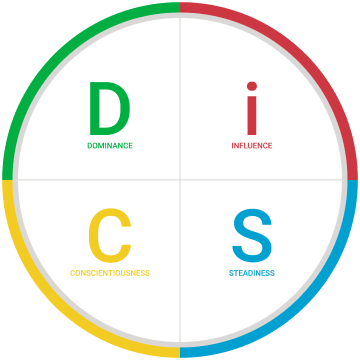
That is a simplification of human behavior. The strength of this model is that it’s intuitive, creates easily memorable distinctions among team members, and enables fast, focused discussions about how team members might interact or respond to one another. (“How do you think a D might handle conflict differently than an S?”)
It’s also fair to say Everything DiSC® flattens the complexity of how people behave at work. Everyone responds differently to people, challenges, pace, and procedures based on context, mood, cultural background, stress level, role expectations, and a host of internal psychological drivers that Everything DiSC® doesn’t measure. Things like emotional stability (OPQ Describes me as… neurotic vs. calm), openness to new experiences, competitiveness, achievement motivation, affiliation, power – none of these are intended to be captured in the Everything DiSC® assessment.
Put another way, Everything DiSC® is very good at describing how someone will behave in various work situations, but not necessarily why they behave that way. It doesn’t explain how someone’s style may shift when under stress, nor can it predict behavior in areas unrelated to work.
Many skilled facilitators preempt this criticism by explicitly stating Everything DiSC® is a “snapshot of where your priorities are at this moment in time” and by not using it as participants’ sole source of development within a program. Used as a conversation starter or teambuilding activity alongside other exercises (career pathing, 360 feedback, values identification, etc.), the concern over oversimplification is lessened.
2. Everything DiSC® Feedback Is Susceptible To “The Barnum Effect”
Personality and behavioral assessments are notorious for participants reading their results and thinking, “This is so accurate!” or “Wow, my manager really got me!” This is known as the Barnum or Forer Effect. Dr. Bertram Forer gave his students a personality test, then provided them all with the exact same generalized, flattering feedback a few weeks later. The students were asked to rate how well the description applied to them personally. As you might guess, they gave it high marks!
Everything DiSC® provides very individualized feedback (your priority dots, custom-written style narrative), so it isn’t quite as “generic” as some of the older DISC® versions out there. Additionally, Wiley brands its tools as “behavioral assessments” and goes to some length to avoid using overly broad descriptors for styles in their reporting. Nevertheless, the core style descriptions (“You are direct and results-oriented” for D styles; “You are warm and collaborative” for iS styles) are necessarily vague so most people can relate to them. Users in workshops have told me, “This is so me!” when processing their style—not ideal if they believe the tool captured their unique personality.
Again, the tool itself and many certified facilitators are careful to point out that Everything DiSC® measures are behaviors, not fixed traits. Facilitators are also trained to remind participants that a style is a preference, not a box you fit into, and that no one is 100% one style – we all use all four styles to varying extents.
3. Everything DiSC Is Based on Decades-Old Theory
The four quadrants of behavior aren’t new. The original DISC® theory is from William Moulton Marston’s Emotions of Normal People, published in 1928. Marston defined four primary ways that people reacted to the world around them. You’ll also find references to “4 behaviors” that date back to Socrates.
Everything DiSC® is not Marston’s tool, as he created the theory and never worked on a way to measure the 4 components. Wiley has iterated on the original concept developed by Clarke and Geier from the 50’s and 60’s considerably (adaptive item presentation; priority dots; circumplex scaling) over the decades, and Everything DiSC® has undergone large-scale validation studies that the original publishers did not.
However, if you lay the four standard DISC® styles over Marston’s theory, you’ll see they are essentially the same. There have been some shifts in what traits and behaviors belong in each style box, but the quadrants themselves remain intact.
A fair criticism of Everything DiSC® and many other DISC-based tools is that personality research has come a long way since the 1920s and 30s. The Big Five personality dimensions emerged in the late 80s/early 90s after decades of research attempting to solidify the “number of traits” needed to accurately and comprehensively measure personality. With cross-cultural reliability and predictive strength for things like job performance, learning styles, and leadership potential, the Big Five model is considered the gold standard in scientific personality assessments. Everything DiSC® clearly correlates with certain Big Five scales (Your i scale score relates to how Extroverted you are; Your C scale score indicates how detail-oriented you are) but not others, notably low Neuroticism (Everyone DiSC® measures how quick to react you are with its C scale, but that doesn’t necessarily equate to emotional stability) or high Openness to Experience.
Reviewer Joanna Harader puts it best when she says that in academic and research settings, DiSC® tools (and many of their theoretical counterparts) get described as “useful heuristics” rather than formal theories or models. By that, she means they work well for their intended purpose and have some degree of predictive power (nothing is ever perfect!), but the data fits their forced model because of how they are structured, not because it matches the underlying structure of personality.
Does Everything DiSC® Behavior Align with Job Performance?
Everything DiSC’s roots in an early theory of behavior and the lack of certain personality dimensions in its measurement don’t mean the tool isn’t valid for workplace purposes. Wiley clearly states the intended use of the Everything DiSC® tool on its website. The problem arises when users (and unfortunately some facilitators) jump to conclusions from the tool onto clinical inferences about users or hire characteristics.
Looking Ahead…
As we discussed in the article on validity, reliability is about consistency. But do consistent results mean Everything DiSC® can predict things like job performance? Find out in Article 4.